
When building envelope air barriers fail, it is rarely in the middle of a continuous wall-sheathing panel. Flat boards or concrete walls seal easily because they have little complex geometry or joint movement. Transitions are a different story altogether.
Edges, gaps, and junctions are where air barrier continuity is usually won or lost – where materials meet at complex transition zones. The conclusion is simple: an air barrier assembly is only as continuous as its transitions. You don’t solve this problem through piecemeal patchwork; you solve it with system-based solutions.
Let’s take a transition-by-transition look at where envelope performance is actually decided and find out how Sto Corp. can help.
What “Continuous” Actually Requires
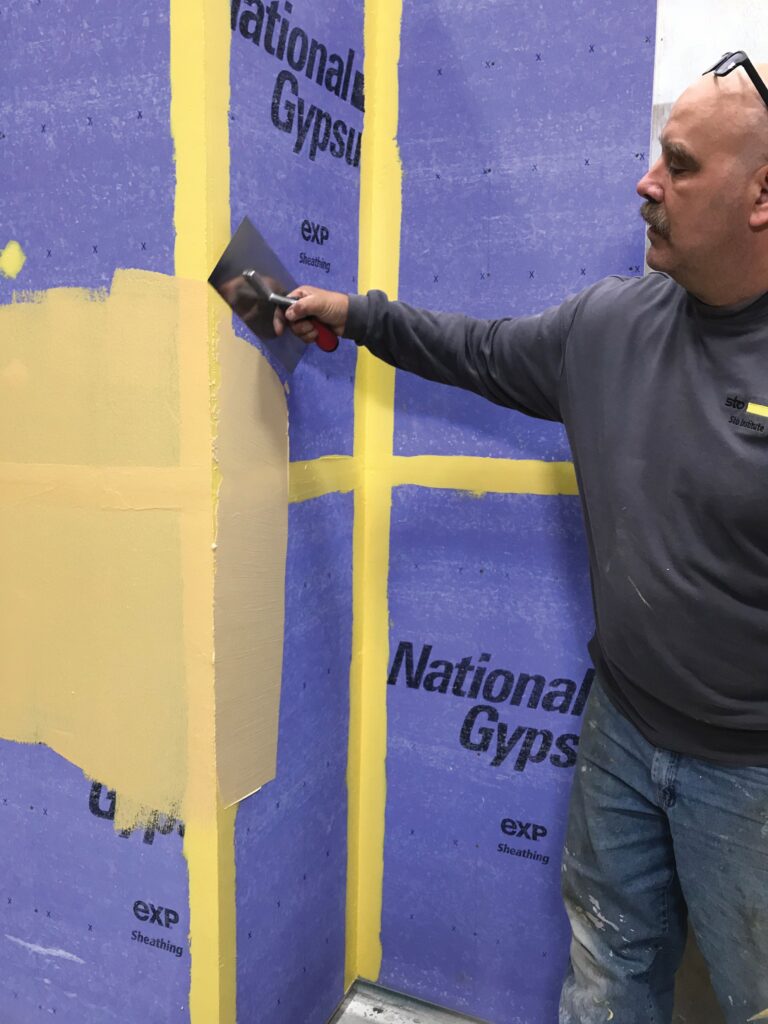
Standalone air barrier materials don’t necessarily cut it when it comes to “continuous,” as far as energy and building codes are concerned. Both the International Building Code (IBC) and International Energy Conservation Code (IECC) mandate complete air barrier assemblies. This distinction is important; just because a material has been tested as an air barrier on a flat wall, it doesn’t mean it satisfies code or real-world continuity requirements.
The Five Highest-Risk Transitions
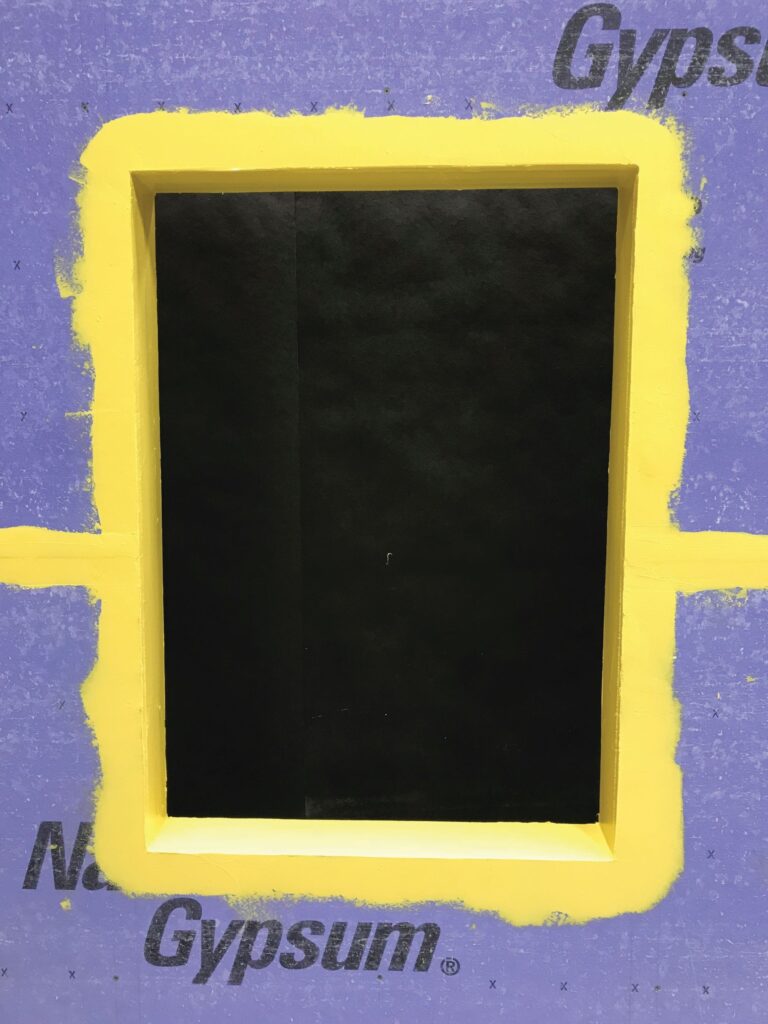
The risk of losing the battle in air barrier continuity is highest in the following types of transitions:
- Wall to Roof and Parapets:
- High wind shear, thermal expansion, and movement between framing and roof.
- Wall to Foundation & Below-Grade:
- Settling of the ground underneath, splash-back, and moisture exposure at slab interfaces.
- Fenestrations (Windows & Doors):
- Rough openings where air and water planes are interrupted.
- Dissimilar Substrates:
- The points where materials with different expansion rates transition to one another.
- Penetrations:
- Places with mechanical, plumbing, electrical, and structural attachments.
Poorly addressing these transition points may lead to moisture in cavities, saturated insulation, condensation and energy loss, premature finish degradation, warranty claims, and callbacks.
How Sto Solves Transitions as a System

Sto’s solution to air barrier continuity at transitions is based on systems rather than standalone products. No single product serves as the “hero” in this approach, but a carefully engineered combination works together to get the job done.
Sto’s primary continuous plane applied over the broad flat areas of wall sheathing is StoGuard® AWRB. Multiple formulations are available so specifiers can choose based on their specific jobsite requirements such as climate, drying capability, installation speed or substrate type.
The StoGuard AWRB line includes:
- Fluid-Applied: Liquid coating applied onto sheathing.
- Sto Gold Coat® – Designed for installation on most commonly used substrates. Suitable for use behind most exterior claddings, including rainscreen, metal, wood, stone, brick, and masonry. Can be used as part of StoTherm, StoPowerwall, StoQuik, and StoVentec wall systems.
- Sto AirSeal® – Features 500% elongation and is optimized for high-build installation on most commonly used substrates. Suitable for use behind most exterior claddings including rainscreen, metal, wood, stone, brick, and masonry. Can be used as part of StoTherm, StoPowerwall, StoQuik, and StoVentec wall systems.
- Sto ExtraSeal® – Cement-based air barrier and water penetration resistant material for use over prepared vertical above-grade concrete and concrete masonry (CMU) walls.
- Sto GoldSeal® STPE – moisture-cure chemistry with superior adhesion for use in humid, cold, and wet climates across a wide range of substrates including glass mat gypsum, wood-based, cementitious, concrete, and concrete masonry walls.
- Self-Adhered Sheet Membranes: Self-adhered air and water-resistant barrier for use over prepared vertical above-grade concrete, concrete masonry, wood sheathing, glass mat gypsum sheathing, and cementitious sheathing.
- StoShield® SA NP – non-permeable
- StoShield® SA VP – vapor-permeable
To complement the primary plane, there are specialized accessories that ensure air barrier transition continuity.
- Sto RapidGuard®: one-component, moisture-cured, damp surface tolerant detail component used as flashing at exterior wall openings and to seal sheathing joints, seams, cracks, penetrations, and other transitions in above grade wall construction.
- StoGuard® Conformable Membrane: Self-adhered membrane that stretches and molds around complex geometry.
- StoGuard® RediCorner: Pre-cut and creased cloth reinforcement used as part of a complete StoGuard system. Used for inside corners of rough openings and the outside corners of pre-fabricated panels or build-outs.
- StoGuard® Fabric, Sto Gold Fill®, StoGuard® Mesh & Sto® Detail Mesh: Specialized joint treatments and fill materials that bridge sheathing seams, substrate gaps, and structural movement joints before top-coating.
How to Specify for Continuity
Sound choices early in the process can help mitigate field failures and value engineering risks later on. Specifying for continuity can be achieved by considering just a few critical factors:
- Select AWRB and cladding together, not sequentially:
- Specifying the AWRB, insulation and cladding as one co-engineered assembly beats selecting products piecemeal and avoids surprises.
- Confirm AWRB physical and chemical compatibility with elements such as insulation, substrate, and finish:
- Materials from different manufacturers create risk. A single-source for all layers ensures compatibility has been tested beforehand.
- Choose a single-source manufacturer for accountability and detailing logic:
- One manufacturer ensures one consistent detailing logic across all transition points, single-source testing and a unified warranty.
- Coordinate transitions with structural and MEP early:
- Avoid late-stage compromises by planning every penetration detail with structural, mechanical, plumbing, and electrical trades before construction starts.
A Continuous Air Barrier Is a Coordinated Decision
While product choice and quality matter for air barrier continuity, how transitions are handled often determines whether it fails or performs. Choosing a single source like Sto for all elements of this continuity keeps the necessary coordination simple and reduces risk.
Air barrier continuity might be tricky, but not if you have a team of experts by your side. Engage Sto’s technical support early in design, or explore our AWRB product pages to find the perfect system-based solution for your project.