
Between the name “rainscreen” and what they look like (pretty panels on the outside of a building), it’s easy to forget that these are more than just an aesthetic choice to cover a wall from rain. In David Hohenstern’s article “System Intelligence: The Rise of Rainscreen Technology in Building Longevity” in The Construction Specifier, he emphasizes that a rainscreen is a combination of many components working together, rather than a single product—and cladding performance is an assembly property, rather than a material one.
Let’s discuss this.
A Brief Evolution of the Rainscreen
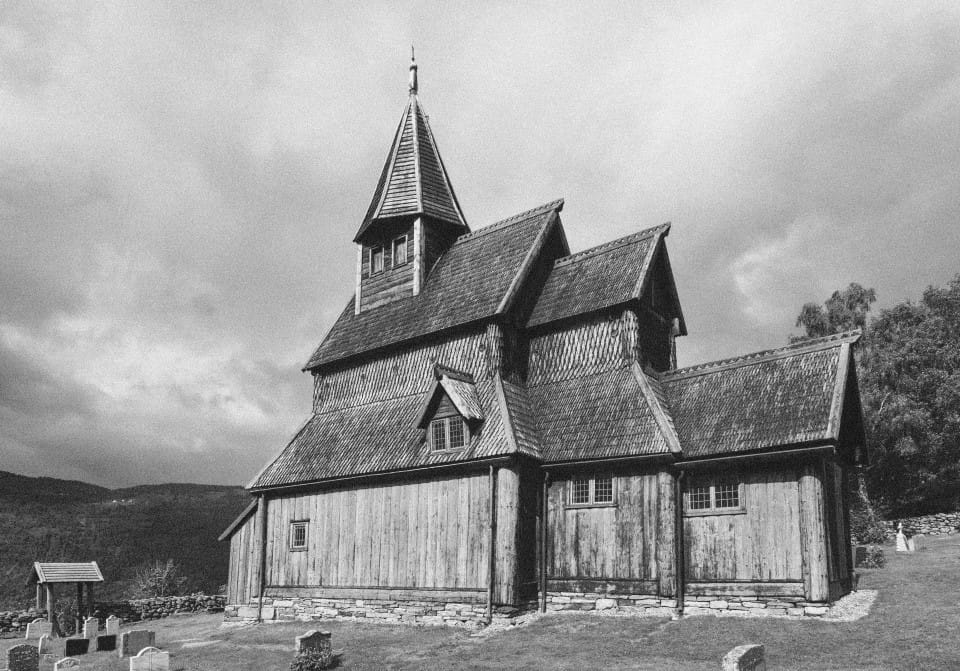
In the article, Hohenstern traces the evolution of the rainscreen. The idea dates back to the 12th century, when the “open-jointed barn technique” first appeared in Norway. The name originates from its use, primarily in the construction of barns. It involved timber cladding adjoined to stone walls and incorporated closed joints on the sides and open joints at the top and bottom to allow rain to drain and evaporate.
The concept evolved through the years into a more modern version, as seen in the 1952 Alcoa Building in Pittsburgh, an early example of a structure with a “pressure-moderated” ventilated outer wall.
According to Hohenstern, by 1971, the American Architectural Manufacturer’s Association (AAMA) published the first formal guide for pressure-equalizing designs. It wasn’t long before the rainscreen we know today became widely used throughout Europe and the U.S.
This evolution transitioned the conversation from one of materials to one of systems— from whether a material can handle rain to how a system manages air and water.
What a Modern Rainscreen Actually Manages
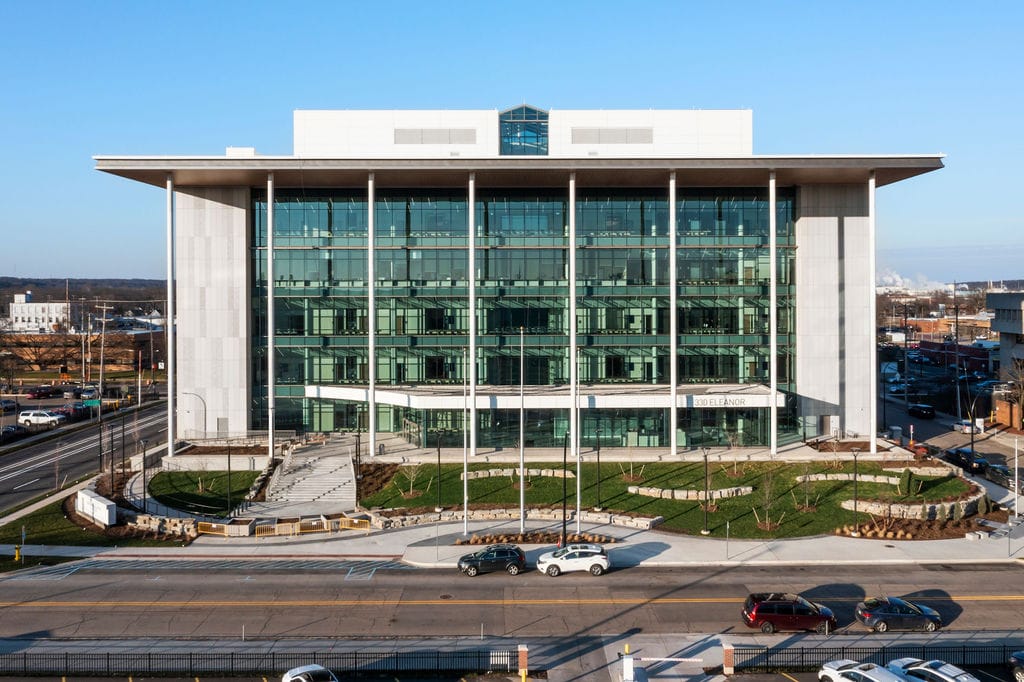
Photography by Brian Phelps
Contrary to what it may sound like, the primary water barrier on a building is the air and water resistive barrier (AWRB), not the rainscreen. The rainscreen is actually designed to limit the amount of water that can come into contact with the WRB.
The rainscreen’s job is to resist five forces:
- Kinetic Energy: Rain drives raindrops through gaps and joints in the cladding.
- Gravity: Water hitting the facade will move downward and into unprotected horizontal openings or defects in the assembly.
- Capillary Action: Surface tension can “suck” the moisture into a wall if water encounters a tiny crack or narrow space between materials.
- Surface Tension: Similar to capillary action, water tends to cling to the underside of horizontal surfaces’ it can then crawl across the bottom of a panel and into the interior.
- Pressure Gradients: When air pressure is higher outside the building than inside the wall cavity, it creates a suction effect that pulls moisture through small breaches.
Because a rainscreen is required to protect against such varied issues, not one material can do everything on its own.
The Five Components That Have to Work in Concert

Five forces require five components, working in concert to get the job done.
- Outer Cladding: Aside from the aesthetic factor, the cladding’s job is to take the brunt of the weather. In a system, it is designed with specific joint widths or breathability to allow the internal cavity to function.
- The Ventilated Cavity: This equalizes air pressure between the outside and the interior cavity to neutralize the force (pressure gradients) that sucks moisture in. The air gap in the ventilated cavity also dries out any moisture that gets through.
- The Air and Water Resistive Barrier: The AWRB ensures that the building remains dry and airtight. In an intelligent system, the AWRB is tested together with the remaining components to make sure they are compatible.
- Continuous Exterior Insulation: Continuous Insulation (CI) keeps the structural wall at a consistent temperature, moving the dew point to the exterior. This prevents interstitial condensation, which can be the hidden killer of many building envelopes.
- Specialized Venting and Flashing: These profiles at the top and bottom of the wall allow enough air in to ventilate the cavity while acting as a barrier against pests and rain.
Because every component has its role, if one fails, the whole system fails. Choosing the right system-based solution ensures the best results.
System Intelligence in Practice—The Sto Approach
Photography by Brian Phelps
Sto provides a system-based solution that takes the guesswork and risks of a “Frankenstein” assembly out of the equation.
- StoVentec® Rainscreen Systems:
- These are engineered as a complete rainscreen system, designed to perform across every layer of the wall.
- With a thermally broken sub-construction and adjustable design, they solve both the energy problem and the challenge of installation with a single solution.
- StoGuard® and StoShield® SA:
- Fluid-applied or self-adhered AWRBs are directly applied onto the building’s substrate.
- This single, seamless layer and offering of detail components integrate with the cladding to work as a system.
- Mineral Wool Continuous Insulation:
- A layer of mineral wool sits on the outside of the building’s studs.
- Putting the insulation on the outside wraps the building in a thermal “blanket” engineered to work with the rainscreen layers.
- StoVentec® Facade Finishes:
- Sto offers a robust selection of fully tested options, including glass, render, fiber cement, and masonry veneer.
- They are designed to work seamlessly with the underlying cavity and sub-construction while delivering complete design freedom.
Using Sto’s solutions provides the benefits and peace of mind that come with one manufacturer, one warranty, and one accountable system.
How to Evaluate a Rainscreen System
When choosing a rainscreen system, what should you look for?
Does the Manufacturer Offer a Complete System?
This mitigates having to choose between different sources for different elements. It simplifies installation and jobsite coordination, minimizes risks of incompatibility, and streamlines warranty concerns.
Has the Assembly Been Tested Under Aama 509 (The North American Standard for Drained-and-Back-Ventilated Rainscreens)?
This ensures the entire assembly manages moisture and air pressure as intended.
Is On-Site Technical Support Available with Thermal Modeling?
Experts who provide thermal modeling and on-site technical support can help calibrate a system to the actual climate conditions to ensure everything works as intended, preventing issues in the future and costly fixes down the line.
How Wide Is the Design Language—Colors, Textures, Claddings?
The system should support many different colors, textures, and claddings without needing to change the underlying engineering. More possibilities make meeting aesthetic goals today and implementing updates in the future easier.
Does the System Support Sustainability, Recycled Content, and Low-Embodied Energy?
Environmental concerns and code compliance should be an important consideration. Recycled materials, sustainable components, and energy- efficient solutions are key to building with conscience.
Intelligence Is the Differentiator
From the 12th century to the 21st, from barns to assemblies, rainscreens have evolved with time to improve and adapt to modern requirements. System intelligence is the natural endpoint to that evolution. Choosing integrated systems that get the job done—as more than the sum of their parts—reduces risk, simplifies coordination, and protects long-term performance.
Explore the StoVentec rainscreen family by clicking here. You can also reach out to Sto’s technical team for project-specific assistance online or by calling 800-221-2397.