
Building occupant safety is a critical concern in construction, and fire safety is at the top of that list. Add in the desire and need to meet modern energy codes and architects can find themselves between a rock and a hard place. NFPA 285 testing for Types I-IV non-combustible construction creates a path to do both with peace of mind.
Types I-IV buildings are required to use non-combustible materials, but the materials used for continuous insulation or air/water-resistive barriers may be combustible. When a situation like this comes around, NFPA 285 testing is triggered, and with it come many factors to consider. Misunderstanding these and getting them wrong can lead to code violations and potential liability.
Fortunately, there’s no need to go into this blind. Sto Tech Hotline 0514-E is an available resource that serves as a guide for architects, specifiers and contractors. Important details of NFPA 285 reside in it, but if you want a quick guide to understanding the rules, testing realities and how Sto Corp. helps cut through the guesswork, this blog post is for you.
What NFPA 285 Actually Tests
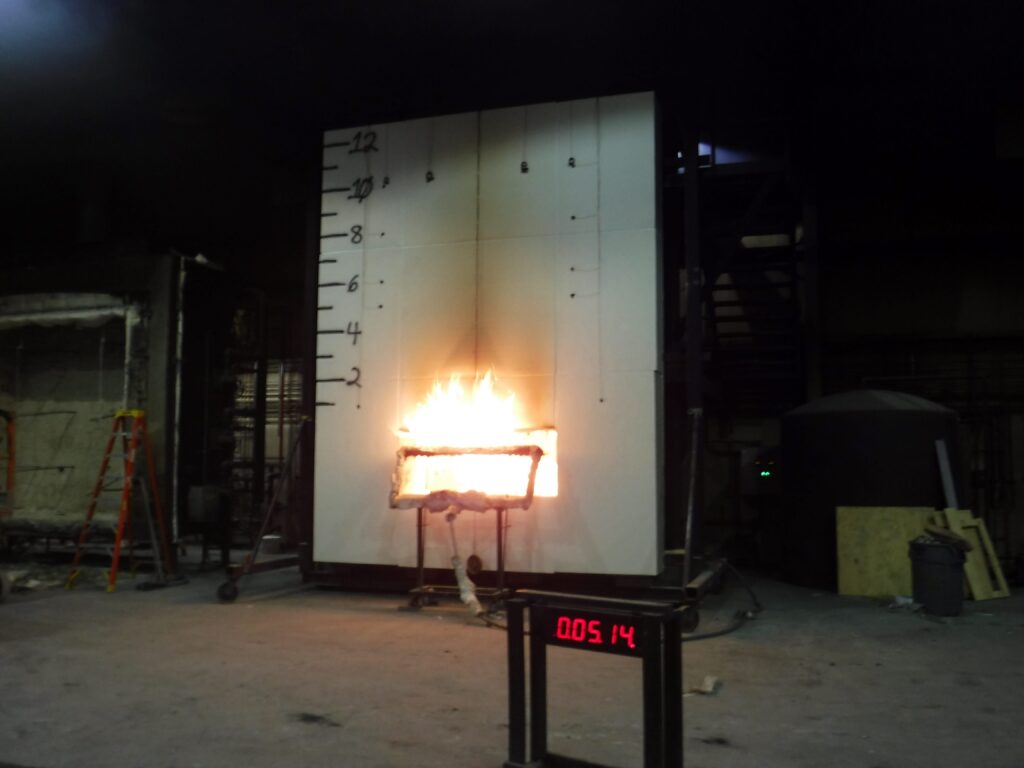
The Standard Fire Test Method for Evaluation of Fire Propagation Characteristics of Exterior Wall Assemblies Containing Combustible Components (NFPA 285) tests how a wall assembly reacts to fire under conditions simulating a real-life scenario.
The NFPA 285 test uses a two-story assembly comprised of the components specified for the system being tested. A gas burner blasts fire through a window opening in the assembly, and the results are evaluated both visually and with temperature sensors. The test runs for 30 minutes, with a maximum allowable fire spread of 10 feet vertically above the window head and 5 feet laterally from the window centerline. Whether the assembly passes depends on how much the fire spreads both on the face of the wall and within its core.
Where the Code Requires NFPA 285

The International Building Code (IBC) classifies certain buildings as Types I-IV based on their occupancy and use. Types I-IV structures are buildings such as high-rise residential, schools, hospitals, and government buildings, which are required to be “non-combustible.” This means their components must be made from materials that do not burn.
When energy codes force the addition of combustible materials as elements of these buildings, NFPA 285 becomes mandatory. Here are situations that trigger NFPA 285 compliance:
- Air/Water-Resistive Barriers (AWRBs): Addressed under 2024 IBC Sections 1402.5 and 1402.6 (previously Section 1403.5 in older editions).
- Exterior Wall Veneers with Laminated Metal Cores: A brand-new addition in the 2024 IBC (Section 1402.7), which requires NFPA 285 testing for veneers that use a combustible adhesive to laminate a metal core to noncombustible facings.
- Foam Plastic Insulation: Addressed under IBC Chapter 26 (Section 2603.5).
Exceptions to full-scale NFPA 285 testing are provided in IBC 2015 and later editions to allow small-scale tests when the AWRB is the only combustible component.
“Tested Assembly” Means What Was Actually Tested
When we say that an assembly has been NFPA 285 tested and found compliant, it refers to a very specific assembly. Field installation must use the same products, generic types, material thicknesses, and installation must be the same as what was tested. Even the window head and base wall details used during testing are part of the tested record.
It’s important to be very mindful of this fact because any change, substitution, or installation variation can affect fire behavior. This means that published test results no longer apply and further analysis or testing is required.
NFPA 285 Annex B gives structure to engineering judgments regarding substitutions based on small-scale testing to compare the combustibility of new materials to those tested. Additional full-scale testing is required if multiple substitutions are proposed or small-scale testing indicates proposed substitutions increase combustibility.
How Sto Demonstrates Compliance

It’s important to take the guesswork out of decision-making with something as critical as NFPA 285 compliance. Sto does this by investing in independent, accredited third-party testing on a wide variety of exterior wall systems.
Systems in Sto’s independent testing portfolio include:
Note: Some older systems were tested to legacy test procedures that fire consultants accept as substitutes.
ICC Evaluation Service Reports provide documentation that an assembly meets code requirements. ICC ESR-1748, for example, evaluates StoTherm ci for its use in Types I-IV construction.
Another resource to reference is design listings like those from Intertek and other agencies. These are valid documentation of compliance for the products listed for applicable test standards, including NFPA 285.
Sometimes minor field adjustments happen. Where rational analysis applies, a project-specific analysis can be done as an engineered basis for compliance. Sto has these revisions applied to our evaluation reports and listings, when appropriate, to provide comprehensive documentation of compliance for Sto systems and products.
What NFPA 285 Doesn’t Cover
While NFPA 285 compliance is a code requirement in the situations mentioned earlier, it does not address all situations or test requirements.
Hourly fire ratings under ASTM E119, which assess how long a wall can maintain its load-bearing capacity and block heat transfer during a fire, are an example of something that NFPA 285 doesn’t cover. While both ASTM E119 and NFPA 285 may be required, they test entirely different properties.
Another example is Type V construction, which is, by definition, combustible. These are typically wood-framed buildings that do not require NFPA 285.
Something to note: combinations that haven’t been tested shouldn’t be used on non-combustible construction. Mixing unverified components without testing or qualified rational analysis is a potential recipe for disaster, leaving the door open for massive code liabilities.
Compliance Comes from Documentation
Handling NFPA 285 requirements correctly in a project goes a long way to prevent issues in the future, both for safety and code compliance. The way to ensure this is done without uncertainty or guesswork is through documentation. Sto’s evaluation reports give specifiers an independently validated basis for use on noncombustible projects.
For a full guide on how to navigate NFPA 285 in your project, check out Sto Tech Hotline 0514-E and the Sto Documentation Center for Code and Test Reports. If you would like guidance from qualified experts for your project, you can reach Sto’s technical support team here.