
When the scaffolds come down on a project, the building looks perfect! If only it could stay that way. Unfortunately, environmental factors begin attacking day one.
In commercial architecture, fading is not just an eyesore, it’s a money pit. Premature fading or chalking can come with a hefty bill and unwanted disruption. Environmental factors such as UV light, moisture and pollution affect the exterior of a building in ways that make the performance expectations fundamentally different from those of interior coatings.
That’s why focusing on color alone doesn’t cut it. The key lies in looking at the chemistry of the entire wall system to ensure that color is protected from the inside out. That’s where Sto Corp. comes into play, with system-based solutions that shift the conversation from “pigment choice” to “formulation strategy.”
The Science Behind Color Stability
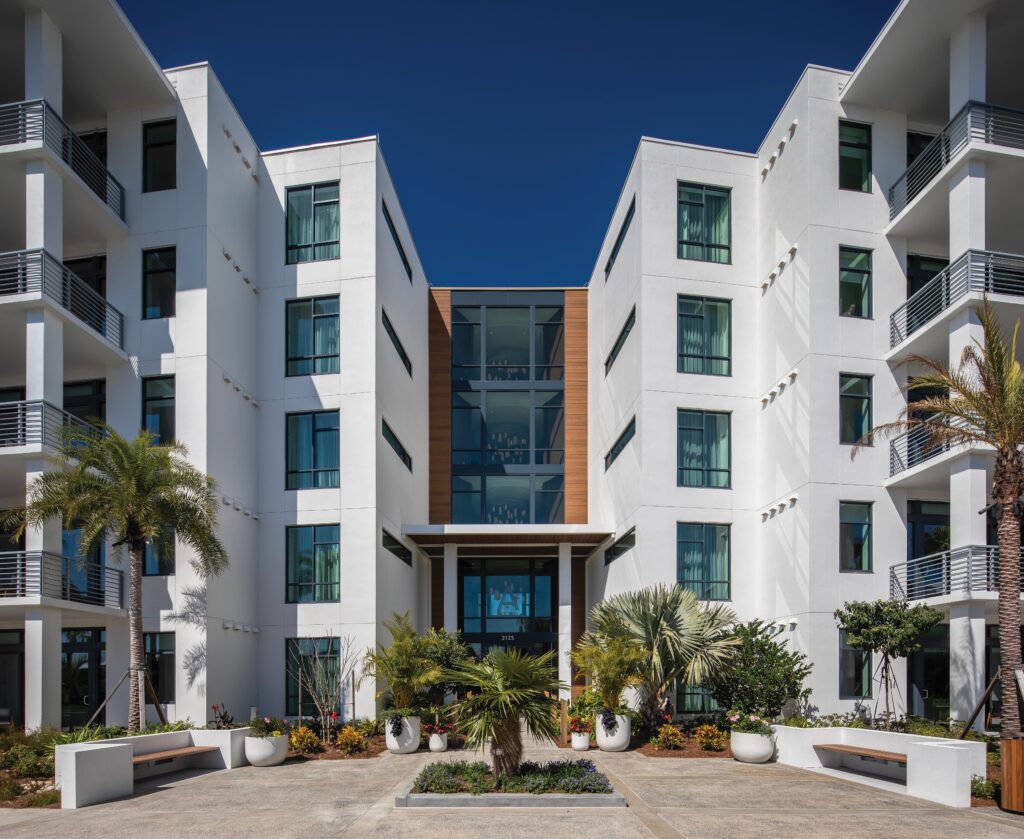
Photo Credit: Chad Baumer
Color stability is a science. Coating durability profiles, for example, can differ due to whether a pigment is organic or inorganic.
- Organic Pigments:
- Offer vibrant colors
- Weaker carbon-based bonds more easily broken by UV rays
- Inorganic Pigments:
- Derived from minerals
- Strong chemical bonds more resistant to photodegradation
Photodegradation tears the molecules of the coating apart, causing chalking and fading over time. A high-quality binder acts as a shield for the pigments. Sto emphasizes high-performance binders that maintain their flexibility and grip over decades.
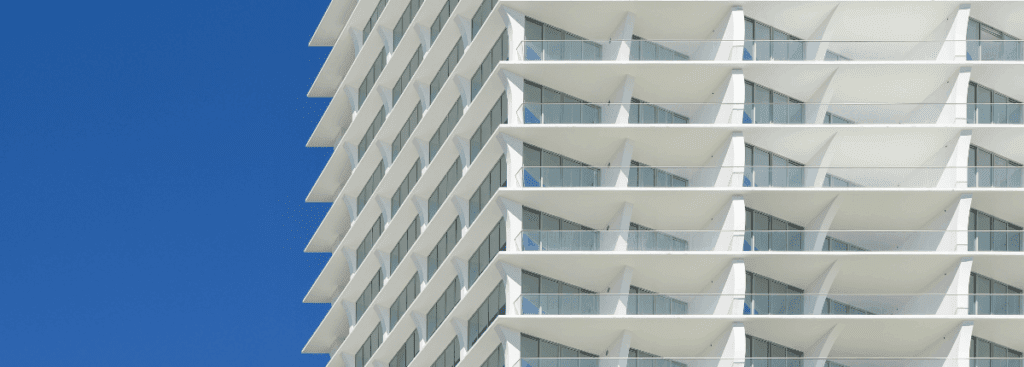
Pigment composition also influences surface temperature. Darker colors absorb more sunlight, causing the surface of the building to become hotter. This increased heat can lead to excessive expansion and contraction of the coating — and the underlying wall system—resulting in cracking, blistering, or delamination. It can also increase movement-related stresses within the wall system and shorten the lifespan of the materials.
Formulation Beyond Pigment Selection

When choosing the right coating for a project, binder chemistry should be at the forefront. Sto engineered formulations provide three key factors that ensure that the facade performs long after the project is complete:
- Equal Dispersion: prevents “hot spots” and streaks by ensuring high-performance pigments are evenly dispersed throughout the coating
- Particle Stability and Encapsulation: prevents drifting or washing away of pigments by encapsulating each particle. This ensures the protective film maintains a uniform thickness, allowing the color to look identical from every viewing angle.
- Vapor permeability: allows the wall to “breathe” so trapped moisture can escape, preventing blistering and blotchy color.
Pairing coatings with StoGuard®, our high-performance air and water-resistive barrier, keeps the facade vapor-permeable and protects against moisture-related failures. When combined with Sto HP Colorants, which are engineered for long-lasting weather resistance and color stability, the result is a wall system designed to preserve both performance and appearance over time
Engineering for Real-World Exposure
Lowes Miami Beach images: Loews Miami Beach Hotel
From Arizona’s UV heat to the Caribbean’s salt spray, it’s important to account for geographical differences and plan accordingly with smart solutions tailored to the local environment.
In humid areas, biological growth like algae and mildew can be an issue. In others, industrial pollutants can chemically react with binders causing color to drift. Some Sto coatings are engineered to resist these. StoColor® Lotusan®, for example, is engineered to have a “self-cleaning” effect by using rainwater to wash away dirt and spores. StoColor® Dryonic® is engineered with a micro-texture that dries facades quickly, inhibiting mold, mildew and algae growth.
To provide solutions to fit the demanding needs of different conditions, Sto products undergo rigorous testing such as South Florida exposure — the industry’s “gold-standard.” This ensures coatings are fade resistant, even in environments where traditional alternatives would be most vulnerable.
Keeping real-world performance in mind, Sto provides technical consultation from planning through completion to help select the best solution for the climate, geography and building orientation.
Designing for Longevity at the System Level
Photo Credit: Chad Baumer
Because of the complex requirements involved in architectural color performance, a system-based approach like that of Sto’s beats a standalone solution.
Sto engineers systems (such as StoTherm® ci) where every component, from the air/water-resistive barrier to the continuous insulation (CI) and the facade material, work together to achieve the desired results.
Coordinating color selection with facade goals such as energy efficiency and thermal management, creates a building that performs as well as it looks.
- Thermal management: Most continuous insulation (CI) systems recommend the use of colors with a Light Reflectance Value (LRV) of 20 or greater to avoid excessive surface temperature. Consult Sto’s technical support for optimized color choices and product recommendations.
- Aesthetic Flexibility: Looks don’t need to suffer in the interest of performance. Sto provides the tools to achieve nearly any aesthetic without compromising the protective qualities of the wall system.
- Design Support: StoInspire® and Sto Studio® are great tools to visualize your project.
Engineered, Not Accidental.
A coating that lasts longer means less waste and long-term costs. Color performance comes with deliberate decisions that align pigment chemistry, coating formulation and facade system design to preserve an architect’s intent for the long-term.
To explore how Sto can protect your next design, visit Architectural Coatings, contact us online, or call 800-221-2397 today.