
Sto HP (High Performance) Colorant System
Sto Colorants are engineered for exceptional color vibrancy, long-lasting weather resistance,and superior endurance so building facades look stunning and maintain their integrity for years to come. Every Sto finish – textured finishes, coatings, stains, or StoCast resin shapes, uses only high-performance colorants engineered for beauty and endurance.
Benefits of Sto HP Colorants
- Longevity
- Advanced pigment chemistry preserves chroma, keeping colors bold, vivid and true by resisting the environmental stress of UV radiation, moisture, and temperature swings
- Superiority
- Advanced engineering for pigment stability and dispersion produces longer-lasting, more vibrant finishes that maintain depth and clarity over time
- Greater resistance to fading, chalking, and surface degradation vs competitor “premium”colorants*
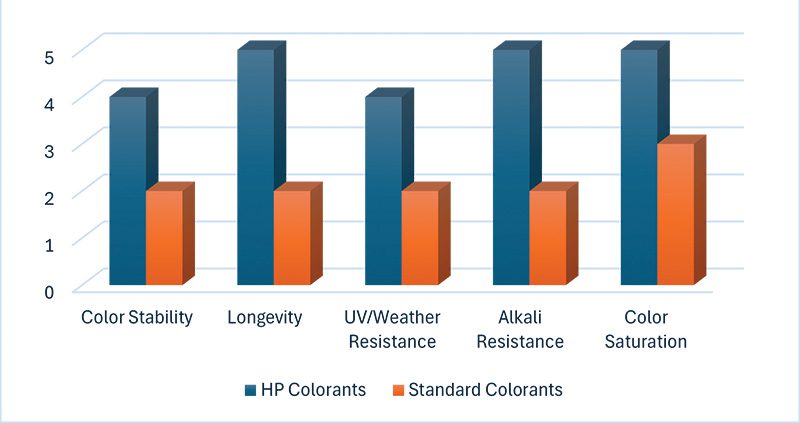
*Via the EMMAQUA testing method, ASTM G90 test for accelerated outdoor weathering testing that represents roughly 5 years ofoutdoor exposure in typical climate conditions.
Advanced Pigment Composition for Resilient Facades
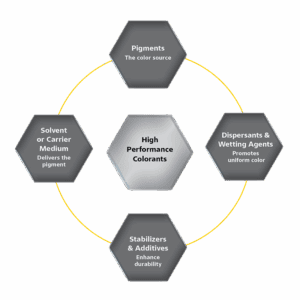
High performance colorants (HP) are formulated with carefully selected pigments, stabilizers, and binders to provide exceptional durability and color stability.
Uniform pigment dispersion provides a consistent appearance across elevations and project phases, while the optimized formulation tints cleanly into Sto coatings and finishes or products for dependable matching and touch-ups.
Sto HP Colorants are produced under strict quality tolerances to maintain uniformity in every batch:
- Gravimetric tinting strength: ± 2%
- Volumetric tinting strength: ± 3%
- Colorimetric values: ΔH (Hue) ± 0.4, ΔC (Chroma) ± 0.6
These tight specifications support accurate color reproduction across all Sto systems and applications.
In addition, Sto HP Colorants are a product range specially developed for modern low VOC decorative coatings.
This maintains compliance with today’s strict environmental standards, delivering high performance with reduced environmental impact.
Choosing the Right Foundation for Lasting Color
Organic vs. Inorganic Pigments:
The color source for Sto HP Colorants is pigments – either organic or inorganic. While organic pigments offer bright, vivid shades, inorganic pigments provide superior stability, opacity, and resistance to weathering—making the right balance essential for long-term facade performance.
Organic pigments can create brilliant colors and bold hues, such as red, teal, and magenta. The tradeoff for the brilliant colors achieved is lower UV (ultraviolet light) and heat resistance, which makes the coating prone to fading over time. Additionally, coatings with organic pigments are often more transparent in deeper bases, requiring more coats for full coverage and sealers to minimize fade resistance.
Inorganic pigments differ from organic pigments because they rely on minerals such assilica, alumina, and titanium dioxide, rather than carbon-based compounds. These minerals are often combined with other additives to improve adhesion, flexibility, and other performance characteristics. Yielding more muted colors, inorganic pigments are an effective solution to environments threatened by heat, chemicals, and UV radiation.
Our Approach: Integrally Colored Finishes Engineered to Perform
It may seem as if the advantages and disadvantages of organic and inorganic pigments paint a black and white picture, so to speak. But there is an easier way to navigate color selection. At Sto, we believe full system integration ensures color longevity, and innovation enables architects and designers to marry design and performance goals.
Sto offers engineered solutions that provide UV-stable coatings, such as StoColor Dryonic®, and StoColor Acryl Plus, which enable better performance with darker, bolder colors.
Understanding LRV
A surface’s Light Reflectance Value measures how much sunlight it reflects or absorbs.
Low-LRV colors, typically dark, saturated tones, absorb more heat, which can accelerate pigment breakdown, chalking, and fading.
Lighter, high-LRV colors reflect more sunlight, reducing surface temperature and thermal stress, which helps maintain color vibrancy over time.

Regional and Environmental Considerations
Geographic and climatic conditions greatly influence color longevity.
Building orientation also plays a role:
High-UV regions such as deserts, tropical zones, and high-altitude environments can accelerate fading and color shift.
Moist or coastal climates may lead to leaching, streaking, or pigment degradation.
Freeze-thaw cycles can contribute to uneven weathering over time.
North-facing facades remain more protected, while east-facing walls often show asymmetric wear from morning sun and dew cycles.
South- and west-facing walls receive the most sunlight and heat, intensifying fading.
Our Best Advice for Specifying Color:
- Choose colors that utilize inorganic pigments for optimal fade resistance and lower maintenance.
- If organic pigments are required, consider using Sto Clear Coat Sealer as a topcoat to extend the life of your coating.
- Consider LRV (light reflectance value), geographic and climate when selecting color and products.
- Use Sto primers to protect pigments and improve opacity and extend color longevity.
- Consult Sto’s technical support for optimized color choices and product recommendations that extend durability and enhance performance.
- Consult the manufacturer for product recommendations when utilizing dark, bold colors.