
Passive House is no longer seen as a niche experimental standard but is now much more mainstream, encompassing both new construction and renovation projects in a wide variety of building types and locations. This rigorous, voluntary standard for energy efficiency in a building, which reduces the building’s carbon footprint, results in ultra-low energy buildings that require very little energy for heating or cooling. As energy codes tighten, achieving these targets requires a shift from adding insulation to system-based wall science.
Passive House Raises the Performance Bar
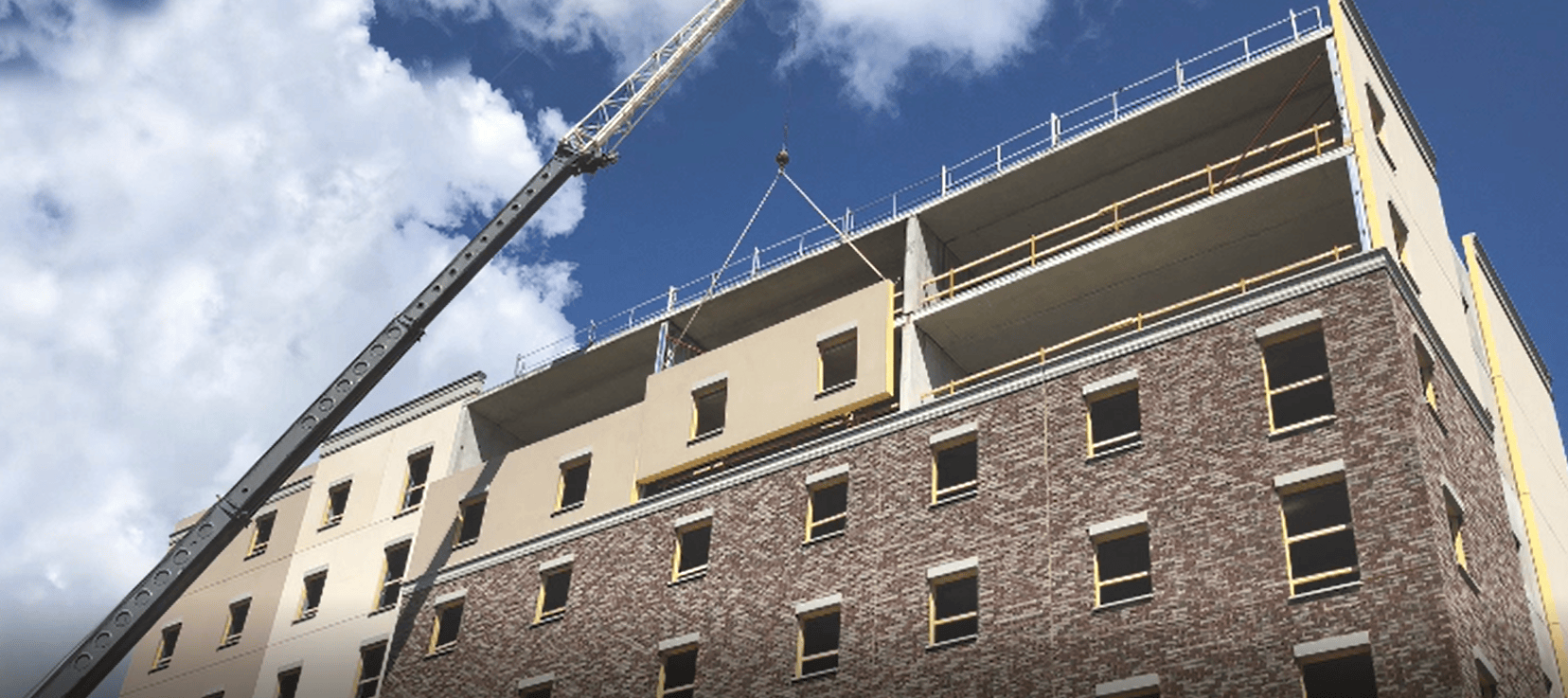
The adoption of Passive House principles is accelerating across both residential and commercial sectors, driven by a demand for long-term building resilience. For example, while R-value has been the standard prescriptive measurement in measuring a material’s resistance to heat flow, it only tells you how a single component performs in a vacuum. In Passive House, U-Factor becomes the superior metric, representing the rate of heat loss through an entire assembly (studs, air gaps, fasteners, and insulation).
Because Passive House U-factors are significantly more stringent than standard IECC codes, exterior wall design must evolve. What these stricter thermal targets mean for external wall design is a shift from prescriptive insulation levels to holistic, performance-based solutions that account for more than just independent factors.
The Impact of Thermal Bridging
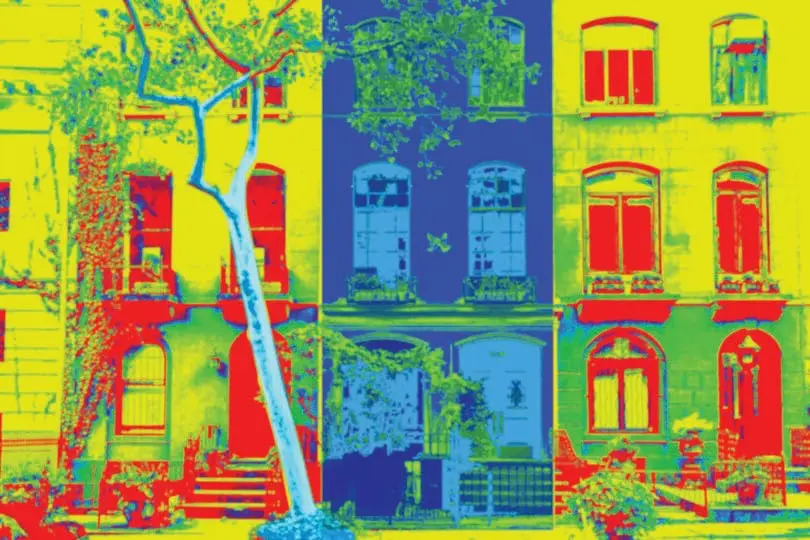
In standard commercial construction, steel framing is one of the primary culprits for energy loss. As a highly conductive material, when it penetrates an insulation layer, it creates “thermal highways” that allow heat to bypass the insulation entirely. This thermal bridging creates a massive discrepancy between nominal and effective R-values.
For example, while a fiberglass batt might be labeled as R-25 (nominal), the presence of steel studs every 16 inches can reduce the assembly’s performance to an effective R-7 or R-8. This represents a 60–70% loss in thermal efficiency. Passive House standard demands very low U-factors, relying on methods such as cavity insulation alone cannot achieve Passive House targets. No matter how much insulation is stuffed between the studs, the steel remains a constant leak that prevents the assembly from ever reaching high-performance benchmarks.
This relationship between framing, thermal conductivity and overall U-factor is a key reason why continuous exterior insulation is essential.
Why Continuous Exterior Insulation Is Essential

To eliminate the problem of thermal bridging and achieve Passive House targets, Sto Corp. systems are engineered to provide a thermal shield that acts as a “blanket” of continuous insulation to wrap the building envelope. These systems effectively neutralize the “thermal highways” created by steel studs in traditional insulation.
This approach offers critical hygrothermal benefits. By moving the insulation to the exterior, Sto systems shift the dew point outside the structural wall cavity, protecting the building from moisture accumulation and mold. Sto’s integrated system approach, incorporating the StoGuard® air and water-resistive barrier, ensures the assembly is both airtight and thermally efficient. Another benefit is that continuous insulation allows for superior performance without the extreme wall depths required by deep-cavity designs; this maintains constructability and maximizes usable interior square footage. Sto provides a reliable way to achieve the ultra-low U-factors essential for high-performance envelopes required by Passive House by focusing on the system rather than individual components.
EIFS as a Practical Path to Passive House
When it comes to EIFS, it is best to think of them not just as cladding, but as a sophisticated building envelope system. When properly designed, EIFS can achieve R-40+ wall assemblies. They are the ideal delivery method for continuous insulation.
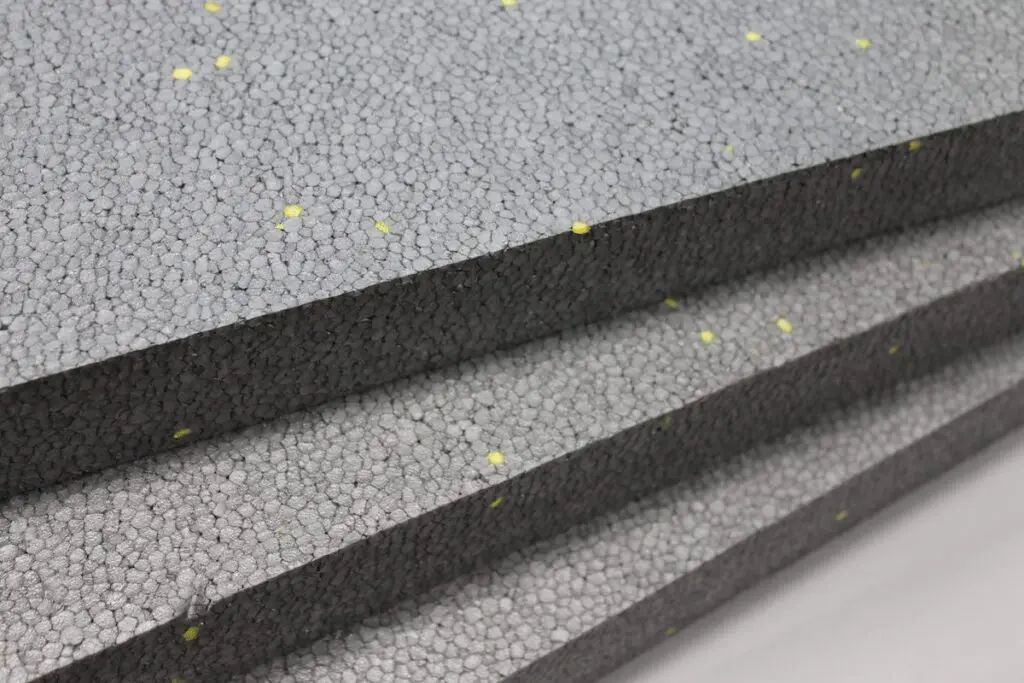
Sto’s EIFS systems, StoTherm, are available with a variety of insulation materials that include expanded polystyrene (EPS), mineral wool, extruded polystyrene (XPS), and graphite polystyrene (GPS). As the newest offering in the StoTherm family, StoTherm ci GPS offers unique benefits for Passive House projects.
Sto GPS Board contains high-purity graphite that reflects radiant heat, providing a higher R-value per inch. This allows designers to achieve R-40+ wall assemblies with thinner profiles, maintaining code compliance while meeting Passive House standards. The board is recyclable and does not contain fluorocarbon blowing agents, resulting in long-term R-value stability, low global warming potential and zero ozone depletion potential.
In addition to being an integral part of the StoTherm ci system, a prefabricated finished wall panel, StoPanel GPS ci, incorporates Sto GPS Board for projects that require schedule certainty and factory-controlled quality.
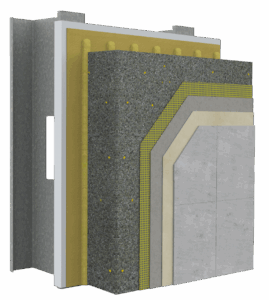
These solutions leverage a system approach combining the AWRB, insulation, and aesthetic finish into a single assembly, creating cost-effective solutions for projects where maximizing thermal resistance per square inch is a critical objective.
Other StoTherm systems, such as StoTherm ci Mineral – as well as StoPanel systems, including StoPanel Classic NExT ci and StoPanel Mineral ci – also create a means to achieve Passive House standards.
Achieving Passive House thermal performance is not theoretical. With thoughtful wall assembly design and continuous exterior insulation, projects can realistically meet stringent Passive House energy targets while maintaining constructability and cost efficiency.
Sto is a trusted building science authority focused on real-world performance. For real world examples of projects using Sto building envelopes that were designed to Passive House standards, please visit our Project Gallery and Case Studies: Atrium at Sumner, Fairfax City Net Zero, and Knickerbocker Commons.
More technical, in-depth information related to achieving Passive House standards with Sto wall systems can be found in Tech Hotline 1125BSc . For assistance with your project, contact us online or call 800-221-2397.